
Glazing systems sometimes have very specific defensive purposes that require specialized engineering. The objective of these systems is to provide visual transparency while protecting the occupants from potentially harmful events. Such is the case with blast-resistant assemblies. It is the goal of this Technical Bulletin to provide an introduction to blast-resistant glazing and an informational overview of this subject.
Typical applications for blast-resistant assemblies include government buildings, military installations, high-traffic infrastructure (airports/stations), petrochemical facilities, and financial institutions to secure perimeters against terror threats, accidental blasts, and natural disasters.
Blast resistant systems, although defensive, are philosophically different from other rigid systems, such as bullet-resistant or windborne flying debris resistant systems. Blast-resistant systems are designed to absorb sudden, high-pressure shockwaves from explosions and to prevent glass from shattering inward into the occupied space. Blast-resistant systems prioritize keeping the glass within the frame and preventing spalling, while other systems focus on stopping penetrations. For this reason, blast-resistant systems typically have heavy-duty framing with ductile materials such as polycarbonates or with tempered laminated glass, utilizing high- performance polymer interlayers that flex without breaking.
The key factors to consider in the design of blast-resistant systems include the defined threat, (i.e. the nature and yield of the explosive force); the stand-off distance between the explosion and the façade (as this energy decreases over distance); and the desired level of protection for the building occupants.
The standards and testing of these systems are quite complex and are generally broken down into the following categories.
- Design Manuals
Blast design criteria is typically outlined in design manuals that relate to Government standards, depending upon the type of facility. These cover typical Federal facilities as well as special use requirements for the Department of Defense, VA, Embassies, and Mission Critical building requirements.
- Test Standards
Blast testing can be conducted on the glazing infill or the entire glazed fenestration system. The most common test methods used for blast testing vary between ASTM and AAMA standards, using a chamber with a witness panel set to the interior of the test sample in which the glass shards may fly or fall during the test. The floor of this chamber and the witness panel are used to determine the hazard rating of the tested assembly.
The test methods do not include or specify the blast requirements; overpressure, duration, impulse, or required hazard level. These requirements must come from the test sponsor or specifying authority based on the project specifications.
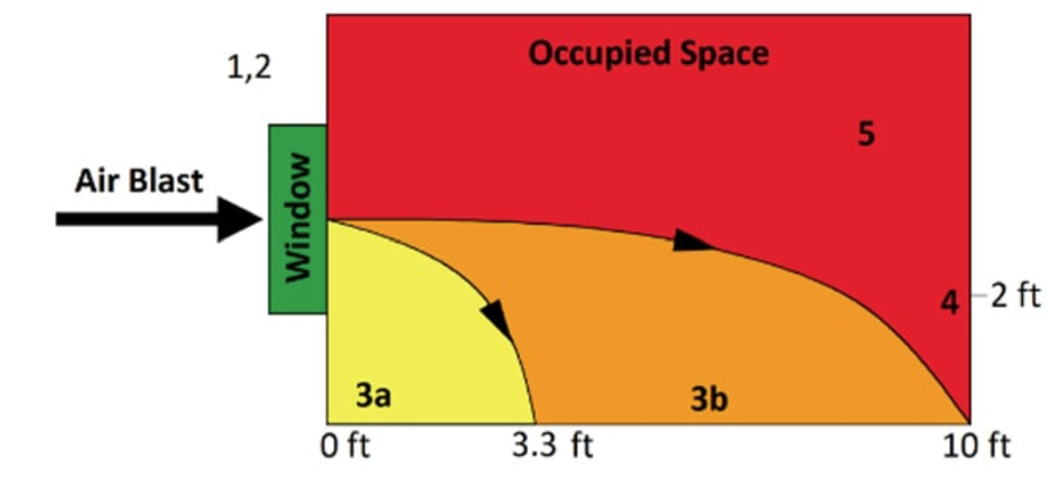
This graph and table show the GSA/ISC performance conditions for blast resistant products and the window system response.
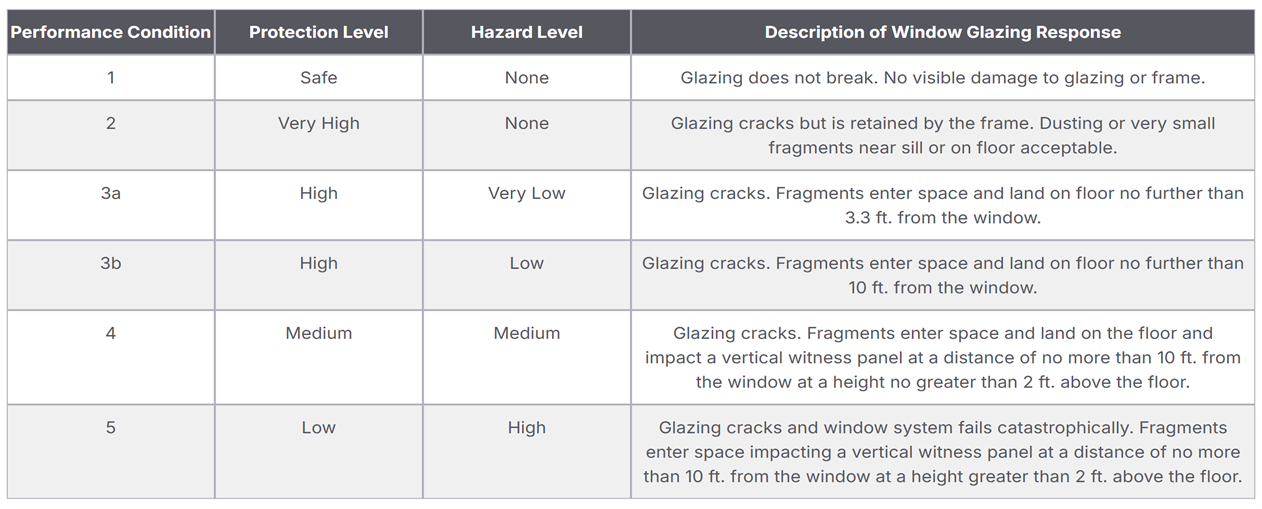
Each system is assigned a hazard rating based on its performance, ranging from:
- Low Hazard (glass cracks but remains in the frame, minimal risk to occupants), to
- High Hazard (glazing dislodges or sends debris into the occupied space).
Overall System Test Evaluations
Glazing Breakage Behavior: Does the glass crack, fracture, or remain intact? If it breaks, does it stay in place, or does it dislodge?
Fragment Projection (Spall): Are glass fragments or debris thrown into the interior space? If so, how far do they travel, and would they pose a risk to building occupants?
Frame and Anchoring System Performance: Does the test frame deform, detach, or otherwise compromise the integrity of the glazing system? Is the attachment to the surrounding structure secure?
Overall System Response: Is the barrier able to absorb the blast energy and remain functional as a protective element, or does it allow breach and potential injury?
In summary, the engineering and application of blast-resistant systems are complicated and provide high life-safety stakes in their overall performance. Understanding the criteria and goals of these systems better prepares façade contractors to seek out and find qualified partners in fulfilling the project requirements.