
When selecting glazing systems for a project, special considerations may arise that require unique knowledge to meet performance standards. It is the responsibility of glazing contractors to understand the performance expectations, the particular ratings of the infill products and how these components work together to meet the specified standards. Such is the case in developing a bullet resistant system and is the subject of this technical bulletin.
A bullet resistant glazing system is comprised of a frame and the glazing infill. Typical applications include banks, currency exchanges, police stations, embassies, military installations, prisons, detention centers, government offices, and schools. Although much attention is rightfully given to the make-up of the glazing material, it is also important that the framing provides adequate protection. In the case of hollow metal frames, they typically are deemed sufficient to resist most threats. In the case of an aluminum frame application, added internal steel would be required to ensure no passage of a projectile through a more vulnerable part of the system.
When selecting the glazing infill material, it is important to determine the specific objectives, starting with the threat level. The most common published testing standards have been provided by ASTM, Underwriters Laboratories (UL) and the National Institute of Justice (NIJ) for ballistic barrier materials and systems. These standards outline the level of bullet resistance you can expect, including the number of shots stopped from a certain caliber of firearm under specific conditions.
Underwriters Laboratories UL 752
Various bullet-resistant standards exist, each with its own scope. For building construction, the Underwriters Laboratories UL 752 standard is commonly used to assess ballistic safety. The UL 752 Standard for Bullet-Resistance covers individual materials such as a fiberglass panel or pieces of laminated glass. It also applies to systems made of multiple materials, such as bullet-resistant doors with a frame or a set-in-place ballistic teller window.
The UL 752 standard specifically notes that “bullet-resisting” means that the material will:
- Prevent complete penetration by a bullet or bullet fragment.
- Prevent spalling or material fragmentation on the protected side of the barrier sufficient enough to injure a person “standing directly behind the bullet-resisting barrier.”
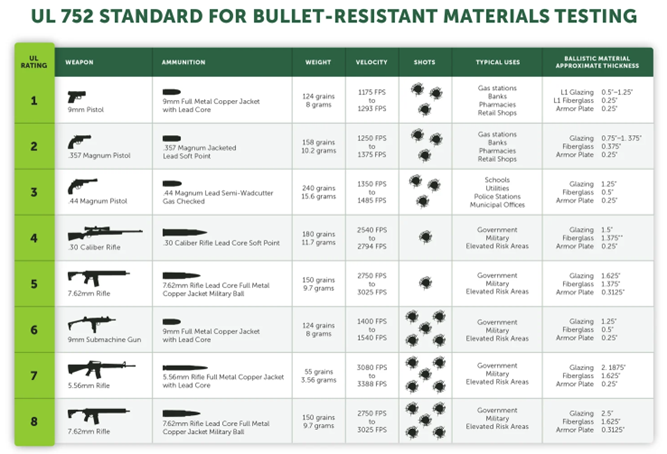
UL 752 recognizes 10 levels of bullet resistance. These levels are not incremental. For instance, material rated at Level 5 would not inherently pass the Level 4 test due to the difference in projectile and velocity.
- Levels 1 through 3are designed to stop three-shot clusters from various common handguns.
- Levels 4 through 8are designed to stop one to five shots from various rifles and submachine guns (including high-powered, sniper, and tactical rifles).
- Levels 9 and 10 are primarily used in military or certain government applications.
ASTM Standards
In comparison to the UL 752 standards, there are several ASTM standards that are important to physical security and safety in building construction, including;
- F1233 Standard Test Method for Security Glazing Materials and Systems
- F1915 Standard Test Methods for Glazing for Detention Facilities
- F1642 Standard Test Method for Glazing and Glazing Systems Subject to Airblast Loadings
- D256 Standard Test Methods for Determining the Izod Pendulum Impact Resistance of Plastics
The ASTM F1233 standard is most relevant to ballistic barrier systems. This standard focuses on forced entry resistance but includes several ballistic ratings. ASTM F1233 also identifies a standard for ballistic attacks in a forced-entry rating calculation. The ballistic ratings include 12 “classes,” which are similar to the UL 752 Levels. Unlike UL 752, these classes generally only require the material to stop between one and three shots.
Glazing product make-ups
Choosing the right type of bulletproof glass for your project will depend on specific risk factors, the materials appropriate to the threat level, and the functionality and aesthetics of the building. The four most common forms of bullet-resistant glazing materials are acrylic, polycarbonate, glass-clad polycarbonate, and insulated glass.
The most common interior types of bullet-resistant glazing use monolithic acrylic or layers of polycarbonate. The most common exterior types of bullet-resistant glazing often involve glass-clad polycarbonates or insulated glass with acrylic or polycarbonate layers. Sample make-ups include;
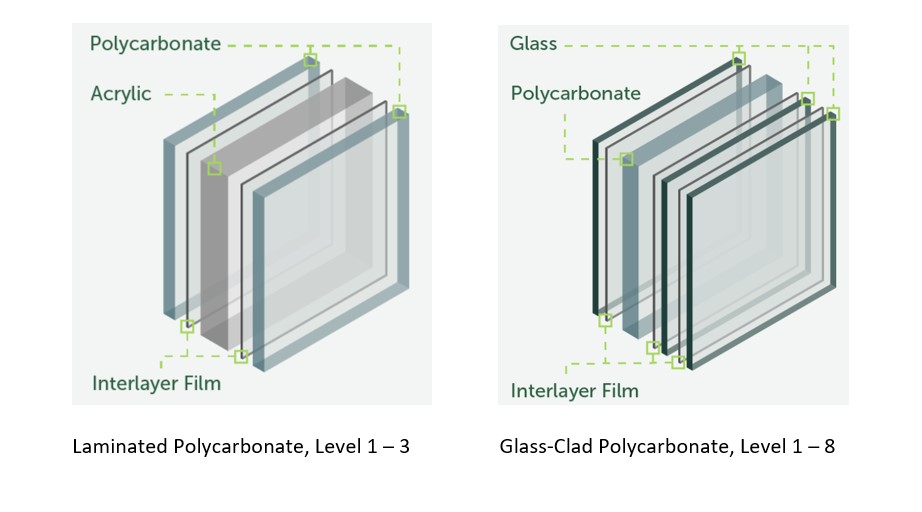
These narratives represent a basic understanding of bullet resistant products used in exterior facades as well as interior conditions. In the end, it is recommended to seek out the expertise of industry vendor partners in evaluating the threat level application, product specifications and available testing of the proposed systems.
Click Here to View the Technical Bulletin in PDF.